
TL;DR
Australia has no mandatory pet food regulations, which means “ethical” claims go unchecked. This guide defines what ethical cat food actually means in the Australian context, then ranks six brands that genuinely deliver on sourcing transparency, animal welfare, and nutritional integrity. The top picks include Pikko (fresh cooked, WA), Open Farm (traceability leader), Frontier Pets (anti-factory farming), ZIWI Peak (shelf-stable premium), Feline Natural (whole-prey nutrition), and CatChi (fresh cooked, Sydney). All are AAFCO complete and balanced.
Many of us have become more mindful of what we put in our own grocery trolleys, from free-range eggs to sustainably caught fish. It makes sense that the same scrutiny now extends to what we feed our cats. But finding genuinely ethical cat food in Australia is harder than it should be, because the country has no enforceable pet food regulations. That puts the responsibility squarely on you.
This isn’t a list of the cheapest options or the most popular brands on supermarket shelves. It’s a guide for Australian cat owners who care about animal welfare, ingredient sourcing, and environmental impact, and who want to make sure those values don’t come at the cost of complete and balanced nutrition.
Take the recipe quiz to see which fresh, ethical cat food suits your cat’s needs.
At-a-Glance Comparison Table
| Brand | Country of Origin | Format | Meat Content | Key Ethical Credential | Storage | Best For |
|---|---|---|---|---|---|---|
| Pikko | Australia (WA) | Fresh cooked, frozen | 100% human-grade meat | Australian-sourced, transparent panels, family-owned | Freezer | WA cat owners wanting fresh, ethical convenience |
| Open Farm | Canada (AU available) | Dry kibble, wet cans | High meat (named cuts) | Certified Humane, GAP Step 4, Ocean Wise, TerraCycle | Pantry | Traceability-first shoppers |
| Frontier Pets | Australia | Freeze-dried raw | 94%+ meat | 100% free-range, anti-factory farming, organic produce | Pantry | Anti-factory farming advocates |
| ZIWI Peak | New Zealand | Air-dried, canned | 96%+ meat | Free-range NZ farms, kaitiakitanga philosophy | Pantry/shelf | Shelf-stable premium seekers |
| Feline Natural | New Zealand | Freeze-dried, canned/pouches | 98%+ meat | 100% NZ traceable, paddock-to-plate sourcing | Pantry/shelf | Whole-prey nutrition fans |
| CatChi | Australia (Sydney) | Fresh cooked, frozen | 95%+ meat | Australian farms, human-grade, algal-based omega oil | Freezer | Sydney/east coast fresh food |
Why “Ethical” Matters More When Australia Has No Pet Food Regulation
Here’s something most Australian cat owners don’t realise: there is no national regulatory framework governing pet food in this country. The Australian Standard AS 5812:2017 covers production, food safety, nutrition, and labelling requirements, but compliance is entirely voluntary. If a brand doesn’t meet the standard, no authority exists to enforce it.
Compare that to human food, which is tightly regulated by Food Standards Australia New Zealand. The gap is striking. As one industry commentator put it, “It’s incomprehensible Australia still has no pet food regulation.”
South Australia may become the first state to change this. The Pet Food (Marketing and Labeling) Act 2024 aims to secure transparency and accuracy in how pet food is marketed. But until similar legislation passes nationally, every claim on a cat food label, whether it says “natural,” “ethical,” or “sustainably sourced,” is essentially self-reported.
Australia also lacks its own equivalent to AAFCO (the US body that sets nutritional adequacy standards) or FEDIAF (the European equivalent). Australian brands that formulate to AAFCO standards do so voluntarily, which actually signals higher commitment to quality.
This regulatory vacuum is precisely why understanding what “ethical” means and knowing which brands back up their claims matters so much.
The Five Pillars of Ethical Cat Food
Before getting into specific brands, it helps to define what “ethical” should mean for cat food in Australia. Based on veterinary guidance, industry standards, and real consumer concerns, five pillars stand out.
Animal Welfare in Sourcing
Ethical brands use meat from animals raised under humane conditions: free-range, grass-fed, or free-run. Look for third-party certifications like Certified Humane or Global Animal Partnership ratings. Brands that don’t specify their sourcing practices are a red flag.
Ingredient Transparency and Traceability
The best ethical brands offer what’s sometimes called “paddock to plate” transparency, allowing you to trace ingredients back to specific farms or regions. Brands using vague labels like “meat by-products” or “and/or” ingredient lists are hiding something. As Dr. Carla Paszkowski from Pet Circle notes, “Look for brands that avoid ‘and/or’ ingredient labels. High-quality, ethical foods use specific meat names and offer traceability tools.”
For a deeper look at what human-grade actually means, it’s worth understanding the difference between ingredients produced in human-food-grade facilities versus standard pet-food processing.
Sustainable Fishing
Fish is a fantastic source of Omega fatty acids for cats, but overfishing is a serious environmental concern. Ethical brands source fish in alignment with third-party standards like Ocean Wise or Seafood Watch. If a brand uses fish but doesn’t mention sustainability sourcing, ask questions.
Environmental Footprint
Over 95% of pet food bags are considered unrecyclable. Packaging matters, and so do carbon emissions from production and transport. Brands that source locally (reducing freight distances), use recyclable or compostable packaging, or partner with recycling programs like TerraCycle demonstrate genuine environmental commitment.
Nutritional Integrity
Ethics should never come at the cost of your cat’s health. Cats are obligate carnivores with specific nutritional needs. Any ethical brand worth considering must still meet AAFCO standards for complete and balanced nutrition. This is non-negotiable.
How We Ranked These Brands
Every brand on this list was evaluated against a consistent set of criteria:
- Sourcing transparency: Can you trace where ingredients come from?
- Animal welfare standards: Free-range, no routine antibiotics, humane certifications?
- Australian-made or sourced preference: Local production reduces transport emissions and supports local farmers.
- Complete and balanced nutrition: Does it meet AAFCO standards?
- Sustainability practices: Packaging, carbon footprint, local sourcing?
- Real user outcomes: What do actual cat owners report?
No brand paid for placement on this list. Pikko is featured because it meets the criteria, and because this article is published on the Pikko website, that relationship is transparent.
The 6 Best Ethical Cat Food Brands in Australia
1. Pikko Fresh Cat Food
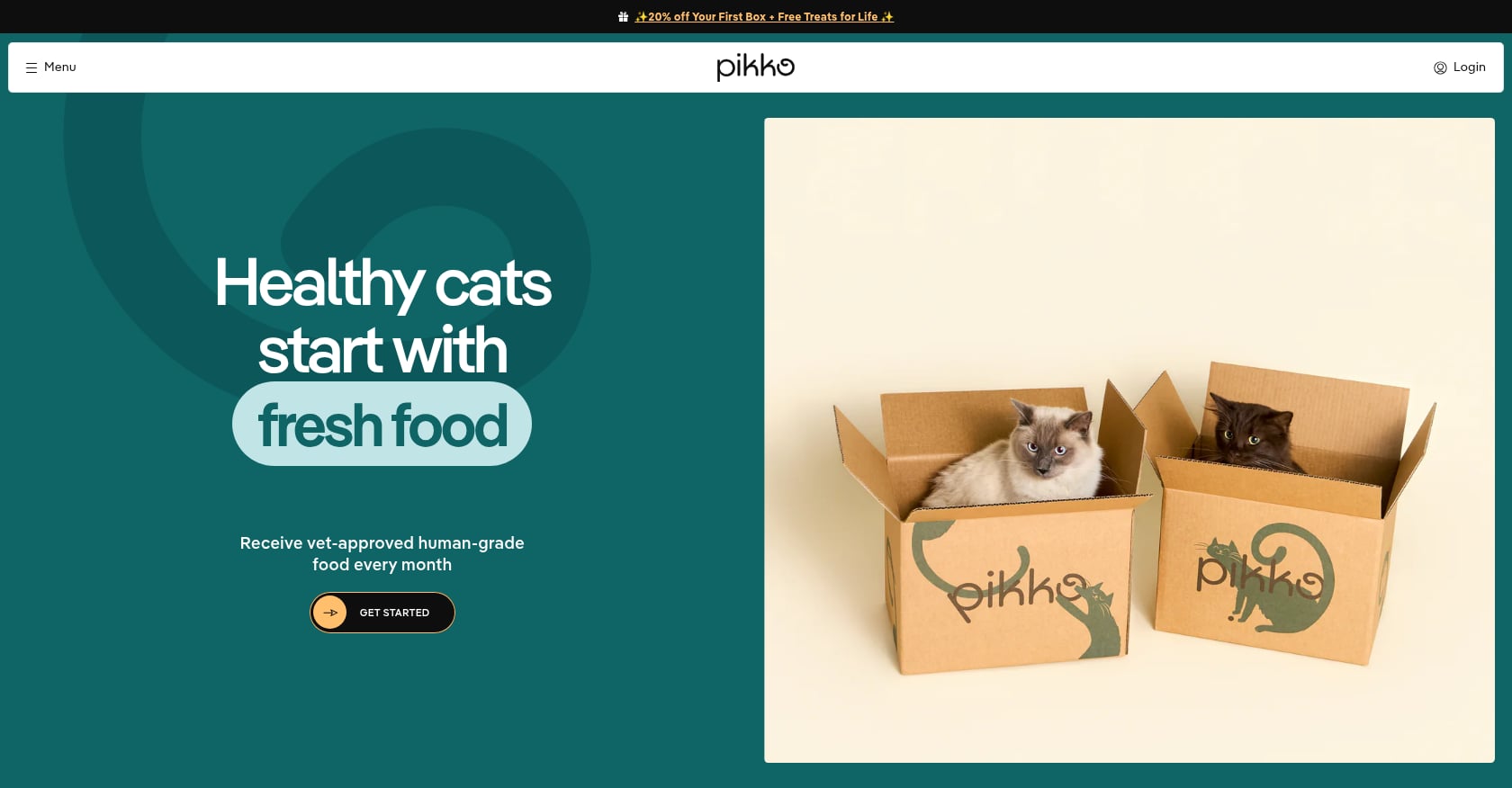
Best for: WA cat owners wanting fresh, gently cooked, human-grade meals delivered with zero effort.
Pikko is a family-owned Western Australian business making fresh cat food from 100% human-grade Australian-sourced meats. Every recipe (chicken, beef, fish, and pork) is gently cooked and frozen, then delivered free across WA in insulated packaging.
Key features:
- AAFCO “all life stages” formulation, vet approved
- Each frozen pouch is calibrated at roughly 200 kcal, designed as one full day’s food for an average 4.5 kg adult cat
- No grains, fillers, or preservatives
- Clear nutrition panels and ingredient lists for every recipe
- Flexible subscription with a 14-pouch trial box for new customers
- Free delivery throughout Western Australia
Ethical credentials: Australian-sourced meat with full ingredient transparency. Gently cooked (not raw) means a safer, more energy-efficient production process than freeze-dried raw supply chains. Being a local WA business means shorter supply chains and lower transport emissions for WA customers. No by-products, no vague labelling.
Tradeoffs:
- Currently ships within WA only (national expansion is underway)
- Requires freezer space and thaw planning
- The fish recipe is a chicken and sardine blend, not a single-protein option
- Higher cost than supermarket kibble or cans
Trustpilot reviews highlight senior cats regaining appetite and energy, improved stool quality, and successful conversions of picky eaters. Multiple reviewers mention fast delivery and responsive customer support.
Browse all Pikko recipes and ingredients to see exactly what goes into each pouch.
2. Open Farm
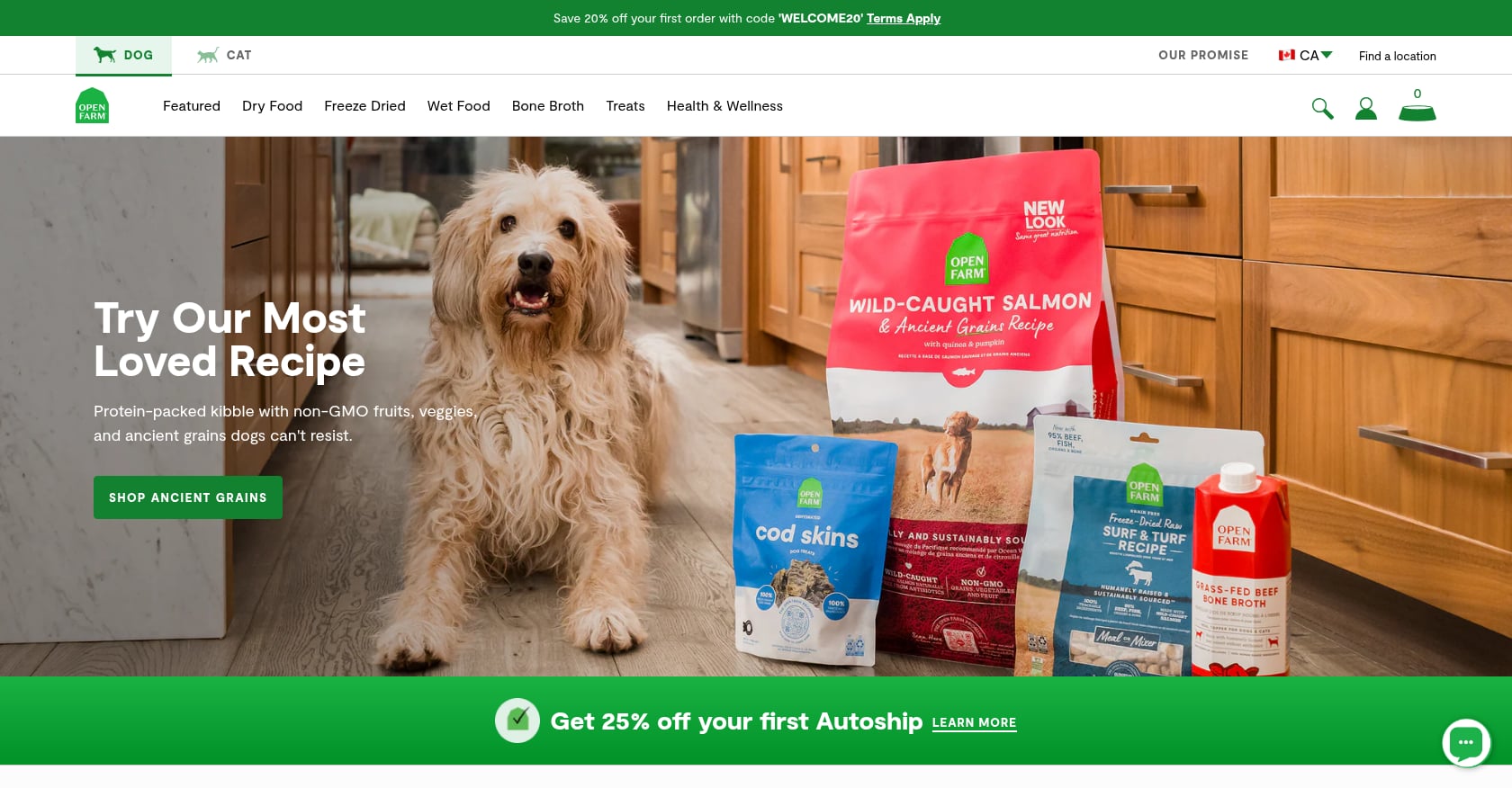
Best for: Ethical-first shoppers who want industry-leading ingredient traceability and third-party welfare certifications.
Founded in 2014 in Toronto, Open Farm was built around a single idea: that pet owners deserve to know exactly where their cat’s food comes from. It’s one of the few brands where you can enter a lot code on the website and trace every ingredient back to its source farm or fishery.
Key features:
- 100% Certified Humane turkey and chicken; 100% Global Animal Partnership Step 4 rated beef
- Ocean Wise certified sustainable seafood
- First pet food brand to create a nationwide bag recycling program through TerraCycle
- Available in Australia through Pet Circle
- Dry kibble and wet food formats
Ethical credentials: Open Farm holds more third-party certifications than any other brand on this list. Every farm and processing facility undergoes ongoing audits. One long-term user on a pet review forum shared, “After feeding Open Farm to my cats for over a year, I can confidently say it’s one of the best decisions I’ve made for their health.”
Tradeoffs:
- Imported from Canada, not Australian-made (higher carbon footprint from shipping)
- Not available as a fresh cooked option, only kibble and canned
- Premium pricing, which is further inflated by import costs
- Limited retail availability compared to some Australian brands
3. Frontier Pets
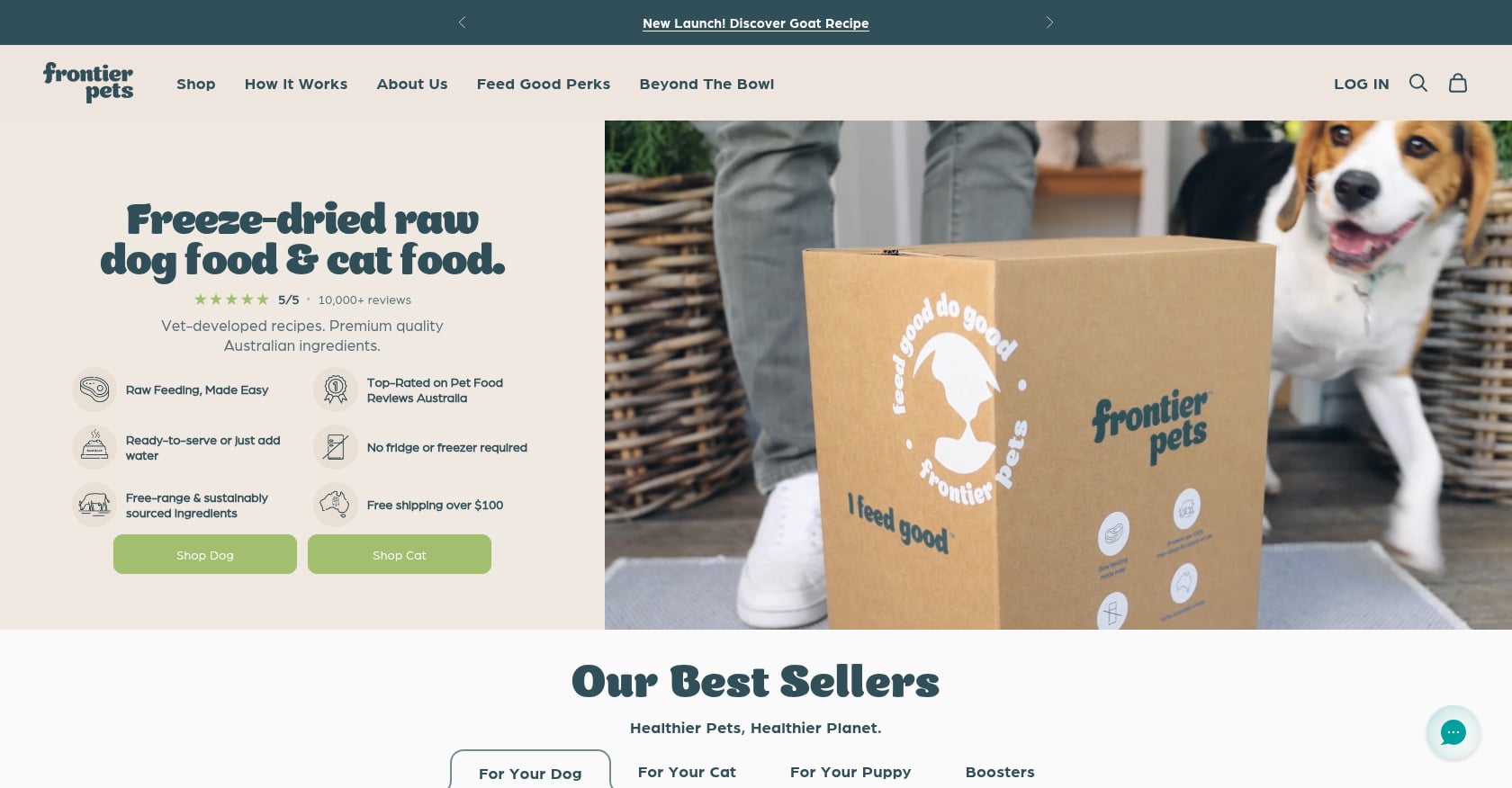
Best for: Anti-factory farming advocates who want a 100% Australian-made ethical option with pantry-friendly storage.
Frontier Pets doesn’t just talk about ethics. It was founded with a mission to end factory farming. The company sources 100% whole-of-life free-range protein and certified organic produce directly from Australian farmers practicing sustainable agriculture, and claims to have contributed over $6 million to sustainably farmed produce.
Key features:
- Minimum 94% meat, bone, offal, and tripe
- Freeze-dried raw format (BARF diet approach), developed by holistic vet Dr. Kathy Cornack
- Human-grade ingredients sourced from named Australian farms
- Pantry storage (no freezer required)
- Ships Australia-wide
- Rated 4.8 out of 5 stars, trusted by 8,800+ Australian pet owners
Ethical credentials: Frontier claims to be the only cat food manufactured in Australia with 100% ethically sourced ingredients. The anti-factory farming stance is central to the brand identity, not a marketing afterthought.
Tradeoffs:
- Freeze-dried raw format carries higher pathogen risk compared to gently cooked options. If the safety difference between fresh cooked and raw cat food matters to you, this is worth considering.
- Some cats refuse the freeze-dried texture. Practitioners on pet food review sites note that “even hungry boy will eat around this food” in some cases.
- Premium price point
- Requires rehydration before serving
4. ZIWI Peak
Best for: Owners wanting ultra-premium, shelf-stable ethical cat food with wide Australian retail availability.
ZIWI Peak is a New Zealand brand built around the Māori concept of kaitiakitanga, which translates roughly as guardianship of the land and sea. Their products use a minimum of 96% sustainably sourced New Zealand meat, seafood, organs, and bone in whole-prey ratios.
Key features:
- Air-dried and canned formats, no refrigeration needed
- Free-range, grass-fed proteins with no antibiotics or growth promotants
- No GMOs, grains, corn, soy, wheat, or rice
- Available at PetBarn, Pet Circle, and independent pet stores across Australia
- Single-sourced protein options (e.g., 100% free-range grass-fed lamb)
Ethical credentials: ZIWI’s sourcing is deeply tied to New Zealand’s farming and fishing practices, which are generally regarded as among the world’s most humane. The brand partners with ethical and sustainable NZ farms.
Tradeoffs:
- The most expensive brand on this list. Daily feeding costs run between $2 and $8 or more depending on your cat’s appetite. Practitioners on Reddit report that “the recent price hike here in Australia is crazy, almost a 30% price increase.”
- Not Australian-made (manufactured in New Zealand)
- Recent ownership change to Chinese investment has concerned some long-time customers
- Air-dried format may not appeal to cats accustomed to wet or fresh food
5. Feline Natural
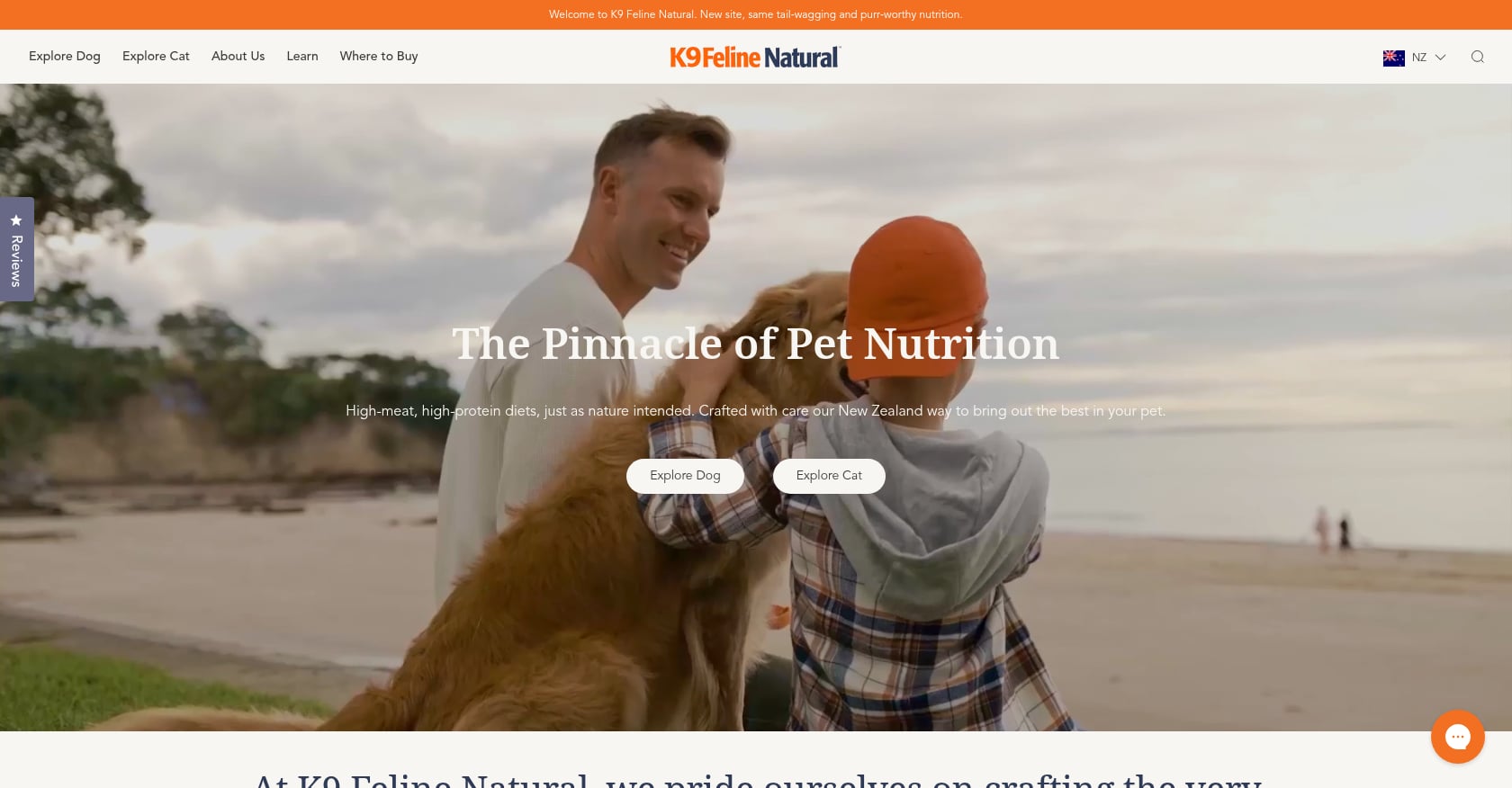
Best for: Owners who want whole-prey-inspired nutrition with rigorous NZ traceability and multiple format choices.
Feline Natural offers 100% traceable ingredients sourced from New Zealand’s ethical farming system. Their recipes contain 98% high-protein, freeze-dried whole foods designed to mimic a cat’s ancestral diet.
Key features:
- Freeze-dried, canned, and pouch formats
- 100% traceable NZ sourcing, paddock to plate
- 98%+ meat content
- No gelling agents, artificial preservatives, or fillers
- Available at PetBarn, Pet Circle, and independent retailers
- Priced around $3.75 per 85g pouch or $5.83 per 170g can
Ethical credentials: New Zealand has earned an international reputation for high livestock welfare standards and food safety. Feline Natural’s “paddock to plate” traceability means every ingredient can be tracked to its origin. One cat owner on a review forum shared, “I feed nothing but Feline Naturals to my kitties. I personally feel it’s the healthiest one not only in Australia, but the world.”
Tradeoffs:
- New Zealand-made, not Australian (import costs and transport emissions)
- Premium pricing across all formats
- The sibling brand K9 Natural had a listeria recall in 2018, which some consumers still remember
- Freeze-dried format requires rehydration
6. CatChi
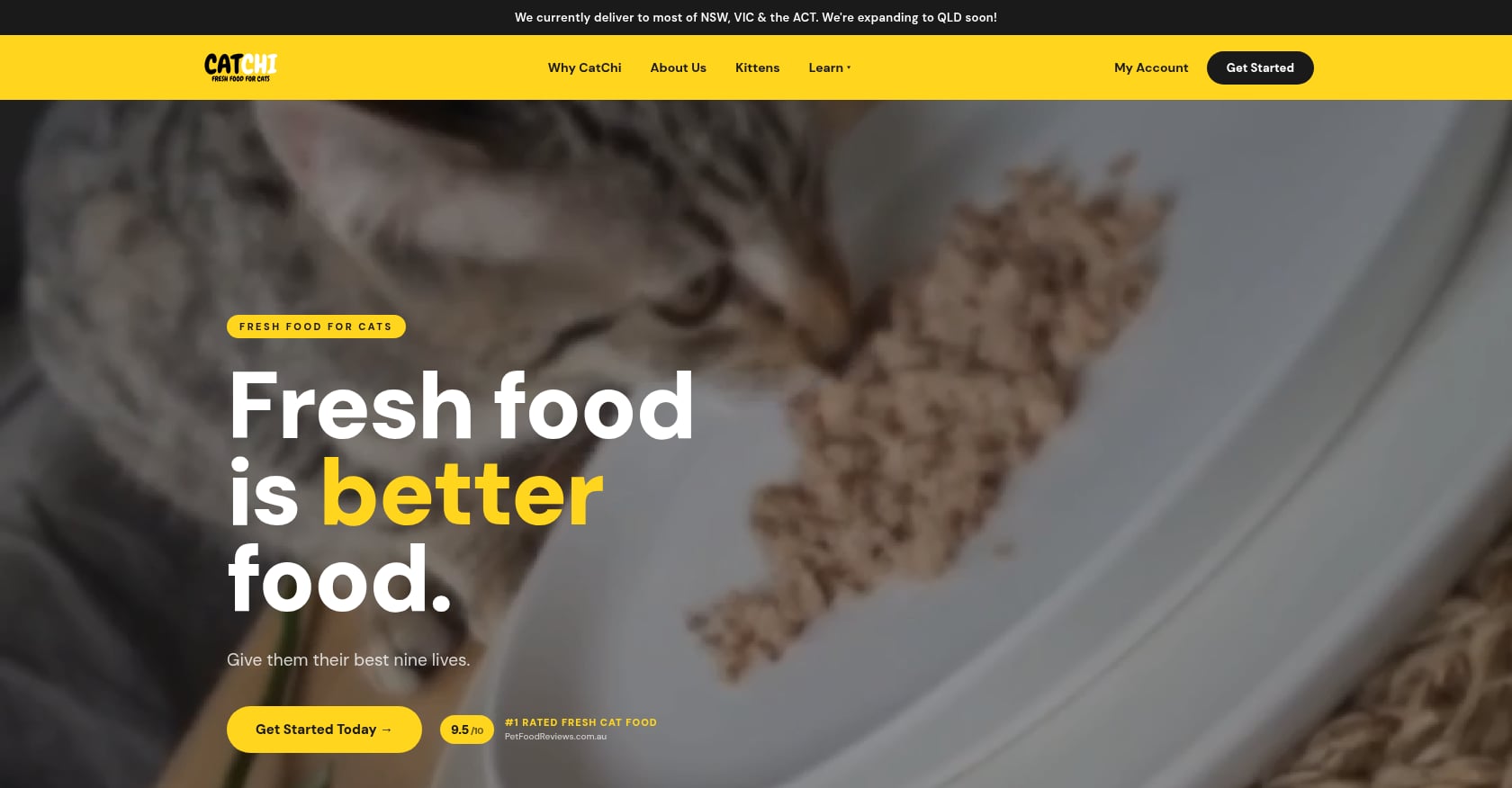
Best for: Sydney and east coast cat owners wanting single-protein, fresh cooked meals from Australian farms.
CatChi is a Sydney-based fresh cat food brand producing gently cooked, frozen meals from human-grade Australian meat. It’s the closest competitor to Pikko in format and philosophy, with a focus on single-protein recipes designed under veterinary recommendation.
Key features:
- Single-protein recipes: chicken, beef, lamb, pork (fish coming soon)
- Consistent 100-calorie portions
- Made in Sydney using Australian-farmed meat
- Uses algal-based omega oil instead of fish oil, which is cleaner, mercury-free, and more sustainable
- Rated 9.5/10 by PetFoodReviews.com.au
Ethical credentials: Australian-sourced, human-grade ingredients with transparent labelling. The switch to algal-based omega oil is a genuine sustainability innovation, eliminating the overfishing concerns tied to conventional fish oil. Single-protein formulas also help owners choose specific ethically sourced meats.
Tradeoffs:
- Geographic reach is still limited (expanding beyond Sydney)
- Requires freezer space
- Single-protein focus means fewer recipe options for variety-seeking cats
- No fish recipe available yet
What About Vegan Cat Food?
Some ethically minded owners wonder whether plant-based cat food solves the animal welfare question entirely. The short answer: cats are obligate carnivores. They require nutrients like taurine, arachidonic acid, and preformed vitamin A that are found naturally only in animal tissue. While synthetic supplementation exists, the veterinary consensus is strongly against feeding cats a vegan diet without close professional supervision. The ethical motivation is understandable, but the nutritional risks are real and potentially life-threatening.
A better approach is choosing brands that source meat ethically and transparently, minimising harm within the food chain rather than eliminating animal products from a species that biologically depends on them.
How to Evaluate Ethical Claims on Any Cat Food
Not every brand can make this list, and new options appear regularly. Here’s how to vet any brand’s ethical claims yourself:
Check the ingredient list. Named meat sources (e.g., “chicken breast,” “lamb liver”) are good. Vague terms like “meat meal” or “animal by-products” are not. Brands that avoid fillers and vague ingredients are worth your attention.
Look for third-party certifications. Certified Humane, Global Animal Partnership, Ocean Wise, or organic certifications from recognised bodies. Self-awarded badges (“eco-friendly!”) mean nothing without external verification.
Ask about sourcing. Where does the meat come from? Which farms? Which country? If a brand can’t answer these questions, they’re not transparent enough.
Verify nutritional completeness. An ethical cat food that doesn’t meet AAFCO standards for complete and balanced nutrition is failing your cat, regardless of how well the animals were sourced. Check the label or product page for an AAFCO adequacy statement.
Consider the supply chain. Australian-made and sourced products typically have lower transport emissions than imported options. Supporting local farmers is an ethical choice in itself. For a broader look at what’s available, here’s a guide to the best cat food in Australia.
The Bigger Picture: Why This Market Is Growing
Australians spend more than $16 billion annually on their pets, with cat owners averaging around $2,100 per cat per year. The premium and super-premium segments now account for roughly 45 to 50% of retail value, up from an estimated 35% in 2020.
Fresh and raw pet food still represents only 1 to 3% of the Australian market, but this segment is growing rapidly. Online pet food sales have grown by 200% since July 2021, driven by subscription models and the same “pet humanisation” trend that has owners applying grocery-aisle standards to their cat’s bowl.
With approximately 5.4 million pet cats in Australian homes (around 27% of households), the demand for ethical, transparent, and nutritionally complete cat food will only increase. The brands that survive will be the ones that can prove their claims, not just print them on packaging.
Ready to try fresh, gently cooked ethical cat food for your cat? Start with a trial box and see the difference real, transparent ingredients make.
Frequently Asked Questions
Is ethical cat food more expensive than regular cat food?
Yes, almost always. Ethical sourcing (free-range meat, sustainable fishing, third-party audits) costs more than factory-farmed ingredients. Expect to pay $2 to $8+ per day depending on the brand and your cat’s size. Many owners view this as a long-term investment in fewer vet bills and better quality of life. For a cost-benefit breakdown, read about whether fresh cat food is worth it.
Can I mix ethical cat food with regular cat food?
Yes. Mixing is actually a practical way to transition gradually or manage costs. Many owners feed ethical cat food as the primary meal and use a conventional option as a supplement. Just ensure the overall diet still meets nutritional requirements.
What’s the difference between human-grade and pet-grade cat food?
Human-grade means every ingredient was produced, handled, and processed in facilities that meet human food safety standards. Pet-grade (or “feed-grade”) ingredients don’t have to meet those standards and can include by-products, rendered meals, and materials not fit for human consumption. It’s a meaningful distinction, not just marketing. You can learn more about human-grade pet food ingredients and what the label actually guarantees.
How do I transition my cat to a new ethical cat food?
Gradually over 7 to 10 days is the standard advice. Start by mixing roughly 25% new food with 75% old food, then shift the ratio every few days. Some cats handle a faster switch, while others (especially those with sensitive stomachs) need the full transition period. Here’s a complete guide to transitioning your cat to a new diet.
Is gently cooked cat food safer than raw?
Gently cooked food eliminates harmful pathogens like Salmonella and E. coli that can be present in raw diets, while preserving more nutrients than high-heat kibble processing. For households with young children, elderly family members, or immunocompromised individuals, cooked food carries significantly lower risk.
Does AAFCO certification guarantee quality?
AAFCO sets minimum nutritional standards, not quality standards. A food can meet AAFCO requirements while still using low-quality ingredients. Think of AAFCO compliance as the nutritional floor, not the ceiling. The best brands meet AAFCO standards AND use high-quality, transparently sourced ingredients.
Why don’t more Australian brands have ethical certifications?
Third-party certifications like Certified Humane or Global Animal Partnership are costly and time-consuming to obtain. Many smaller Australian brands rely on direct farm relationships and transparency instead of formal certification. This isn’t necessarily worse, but it does mean you need to do more of your own research. The regulatory gap in Australia makes this due diligence even more important.
Are New Zealand-made cat foods considered ethical in Australia?
New Zealand has strong animal welfare standards and a global reputation for ethical farming. Brands like ZIWI Peak and Feline Natural benefit from this reputation. The main ethical tradeoff is the carbon footprint of importing across the Tasman, plus slightly less visibility into supply chains compared to Australian-made options where you can verify sourcing more directly.