
TL;DR
Finding fresh cat food delivery near you depends entirely on your postcode. For Western Australian cat owners, Pikko offers gently cooked, human-grade frozen pouches with free delivery. East coast readers should look at CatChi (Sydney/Melbourne) or Raw & Fresh (raw BARF across NSW, VIC, QLD). If no fresh delivery reaches your area, premium shelf-stable options like ZIWI Peak ship nationally. This guide ranks every option by where they actually deliver, not just how good the food sounds on paper.
How to Use This Guide
Fresh and frozen cat food is the fastest-growing pet food category in Australia, expanding at 15 to 20% per year from roughly 6% of the market’s total value. Cat ownership is surging too. About 34% of Australian households now have at least one cat, up from 27% in 2019. That’s roughly 5.3 million cats across the country, and their owners are increasingly looking for something better than processed kibble.
But here’s the thing most “best fresh cat food delivery near me” guides get wrong: they list brands without checking whether those brands actually deliver to your city. One popular national guide lists a provider restricted to Sydney right alongside one that only ships within Brisbane, with no mention of the gap. Your first filter should always be delivery area, not brand reputation.
Start with where you live. Then narrow by food type (cooked, raw, or shelf-stable). Then compare on cost per day, not box price.
Take the Pikko quiz to see if fresh cat food delivery is available in your area and get a personalised meal plan.
At-a-Glance Comparison Table
| Service | Food Type | Delivery Area | Portioning | Trial Option | Best For |
|---|---|---|---|---|---|
| Pikko | Gently cooked, frozen | WA (free delivery) | ~200 kcal pouch (1 full day) | 14-pouch trial box | WA cat owners, daily simplicity |
| CatChi | Gently cooked, frozen | Sydney, Melbourne, Newcastle metro | 100 kcal portion (½ day) | $99 starter (8 packs, 4 recipes) | East coast, single-protein needs |
| Raw & Fresh | Raw BARF, fresh (not frozen) | East coast AU (SYD/MEL/BRI/CAN + regional) | Varies by product | Starter from $17 | East coast raw feeders on a budget |
| ZIWI Peak | Air-dried | AU-wide (Pet Circle, specialty retail) | Self-serve | N/A (retail purchase) | Shelf-stable premium anywhere in AU |
| Raw Meow | Freeze-dried raw | WA and online | Self-serve | N/A | WA raw feeding enthusiasts |
| Smalls | Gently cooked, frozen | US only | Per-tray (~95-110 kcal) | 50% off sampler | US cat owners (does not ship to AU) |
| KatKin | Gently cooked, frozen | UK only | Personalised daily pouch | Trial box available | UK cat owners (does not ship to AU) |
What to Look for in Fresh Cat Food Delivery
Before picking a service, understand what separates genuinely good fresh cat food from marketing fluff.
AAFCO “complete and balanced” formulation. This means the food meets minimum nutrient profiles for cats at specific life stages. “All life stages” formulations work for kittens, adults, and seniors. If a brand doesn’t state AAFCO compliance (or FEDIAF for European brands), it may be a supplemental food only, not a complete diet.
Human-grade vs. feed-grade. Human-grade means every ingredient was processed in facilities and to standards fit for human consumption. Feed-grade allows by-products, rendered meals, and lower manufacturing standards. The distinction matters because Australian pet food regulation under AS 5812 has historically been voluntary, so the label is your best protection. Brands that publish full ingredient panels and typical analysis are showing you more than they’re required to.
Cooked vs. raw safety. The food-safety risk of raw diets falls on the household, not just the cat. Salmonella and listeria are real concerns, particularly if anyone in the home is immunocompromised, elderly, or very young. Gently cooked options eliminate these pathogens while preserving more nutrients than high-heat kibble processing. For a deeper comparison, read about fresh vs. raw cat food.
Daily cost, not box price. The only honest comparison metric is cost per day at your cat’s calorie requirement, plus shipping. A $99 box that lasts 8 days costs differently per day than a $50 box that lasts 14.
Subscription flexibility. Look for no lock-in contracts, easy pause and cancel options, and the ability to reschedule deliveries around holidays or freezer constraints. This is more important than it sounds, because practitioners on pet owner forums consistently name delivery timing and freezer logistics as top frustrations with subscription models.
The 7 Best Fresh Cat Food Delivery Services
1. Pikko
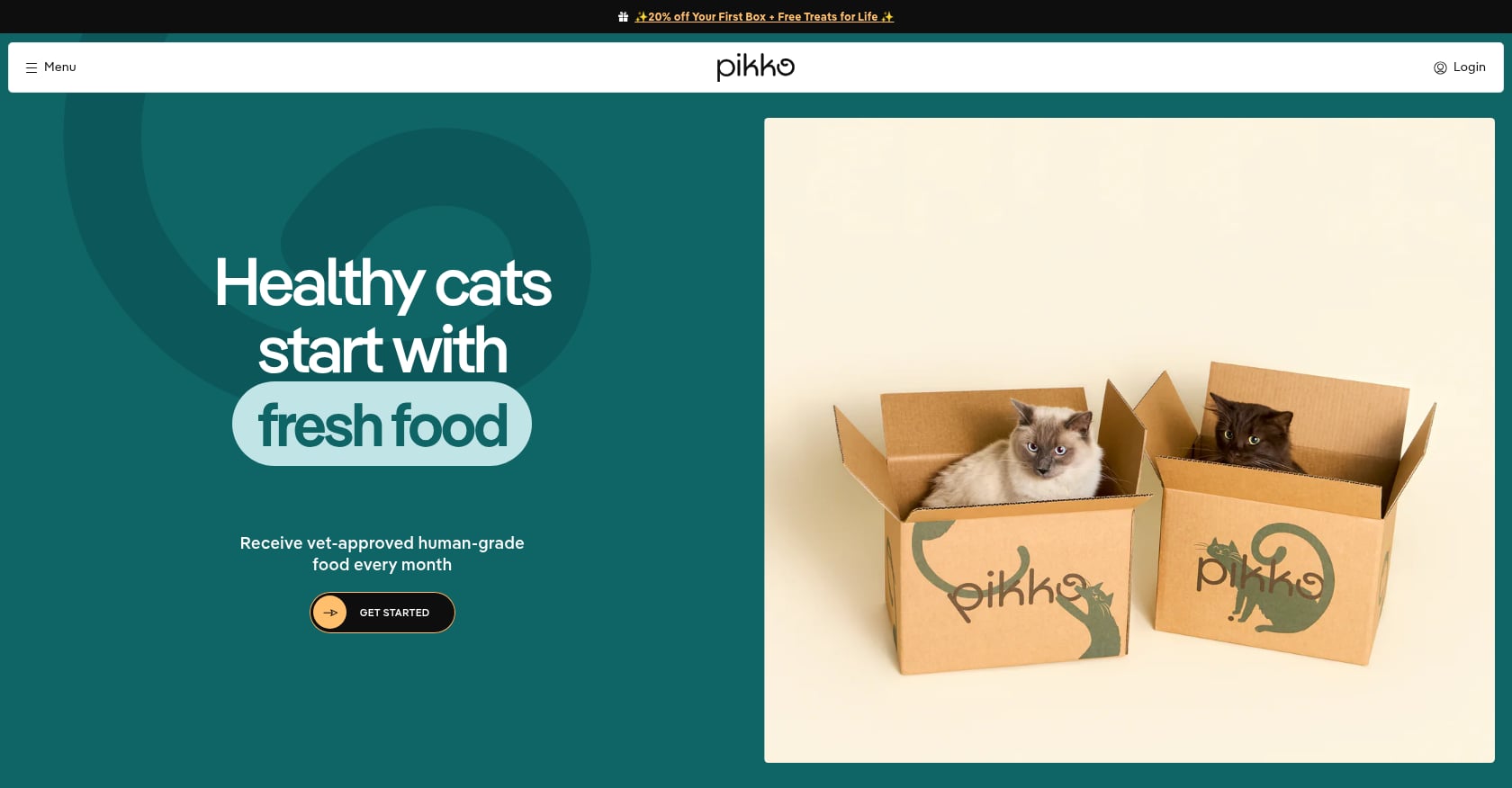
Best for: WA cat owners who want daily portioning simplicity and gently cooked, human-grade meals.
Pikko is an Australian fresh cat food subscription delivering gently cooked, frozen pouches made from 100% human-grade meats. Each pouch contains approximately 200 kcal, which is designed to be one full day’s food for an average adult cat (around 4.5 kg). You split a pouch across breakfast and dinner, and that’s it. No measuring, no guesswork.
Key features:
- Four recipes: chicken, beef, fish (chicken and sardine blend), and pork. See all recipes here.
- AAFCO “all life stages” formulation, vet approved
- 100% human-grade meats, grain-free, no fillers or preservatives
- High moisture content for hydration and urinary support
- Free delivery across Western Australia in insulated boxes (safe for doorstep drop-off)
- Flexible subscription: pause, reschedule, or cancel anytime with no lock-in
- 14-pouch trial box for new customers, with ongoing 28-pouch subscription boxes
Pricing: Pricing is personalised through the Pikko quiz, which recommends a plan based on your cat’s weight and preferences. First-order promotions vary (e.g., 20% off plus a free topper).
User sentiment: Pikko holds an “Excellent” aggregate on Trustpilot across 41 reviews, with customers specifically mentioning improved stools, fussy-eater acceptance, and fast delivery. Independent reviewer Pet Food Reviews Australia rates Pikko as a high-quality gently cooked option and endorses its ingredient profile and macros.
Tradeoffs:
- Currently ships within Western Australia only (Sydney and national expansion is underway)
- Requires freezer space and thaw planning
- The fish recipe is a chicken and sardine blend, not a single-protein option, so cats with specific chicken intolerances should stick to beef or pork
- Soft food provides minimal dental benefit compared to raw meaty bones, so consider supplementing with a dental routine
- Cost is higher than supermarket kibble or canned food
Who should pick Pikko: If you’re in WA and want the simplest possible fresh feeding routine, Pikko’s one-pouch-per-day system is hard to beat. The portioning alone removes a common pain point. For guidance on portioning the 200 kcal pouch across meals, Pikko publishes a detailed guide.
2. CatChi
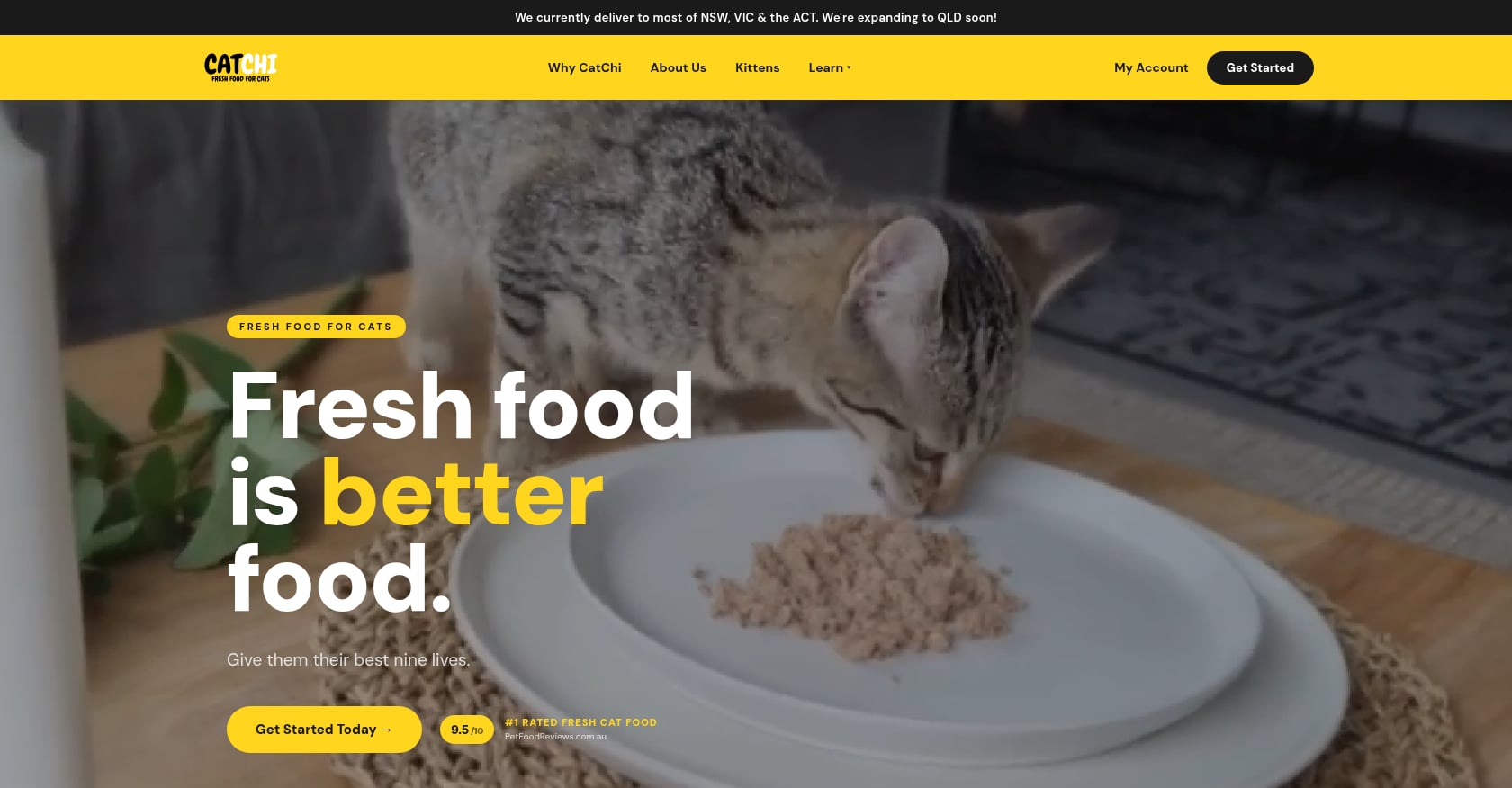
Best for: East coast Australians (Sydney, Melbourne, Newcastle) wanting gently cooked, single-protein fresh cat food.
CatChi is a Sydney-based gently cooked and frozen cat food service with a similar philosophy to Pikko but focused on east coast delivery. Their recipes contain upwards of 95% meat and organs, and they offer single-protein options (chicken, beef, lamb, pork) with a fish recipe coming soon.
Key features:
- Single-protein recipes for cats with specific dietary sensitivities
- AAFCO all life stages formulation
- Human-grade ingredients, approximately 70% moisture per meal
- 100 kcal per portion (each pack contains two meals)
- Free delivery for Greater Sydney, Melbourne, and Newcastle metro (small charge for regional areas)
- No lock-in contracts, easy skip/cancel/reschedule
- Starter pack includes transition sprinkles and a switching guide
Pricing: The starter pack is $99 for 8 packs across 4 recipes. Ongoing subscription pricing is determined at checkout.
User sentiment: CatChi scores 9.5 out of 10 from PetFoodReviews.com.au. A feline vet in Sydney has publicly stated they feed their own cats CatChi and recommend it to patients. CatChi reports that 7 out of 10 customers notice shinier, softer coats within a week of switching. About 30% of cats need some transition time, which the starter pack accounts for.
Tradeoffs:
- At 100 kcal per portion, you need two portions per day for an average cat, meaning you go through packs faster than Pikko’s single-pouch system
- No confirmed delivery to Western Australia
- Ongoing pricing is not publicly listed without going through checkout
- Fish recipe not yet available
Who should pick CatChi: If you’re in Sydney or Melbourne and want single-protein gently cooked meals, CatChi is the strongest east coast option right now.
3. Raw & Fresh
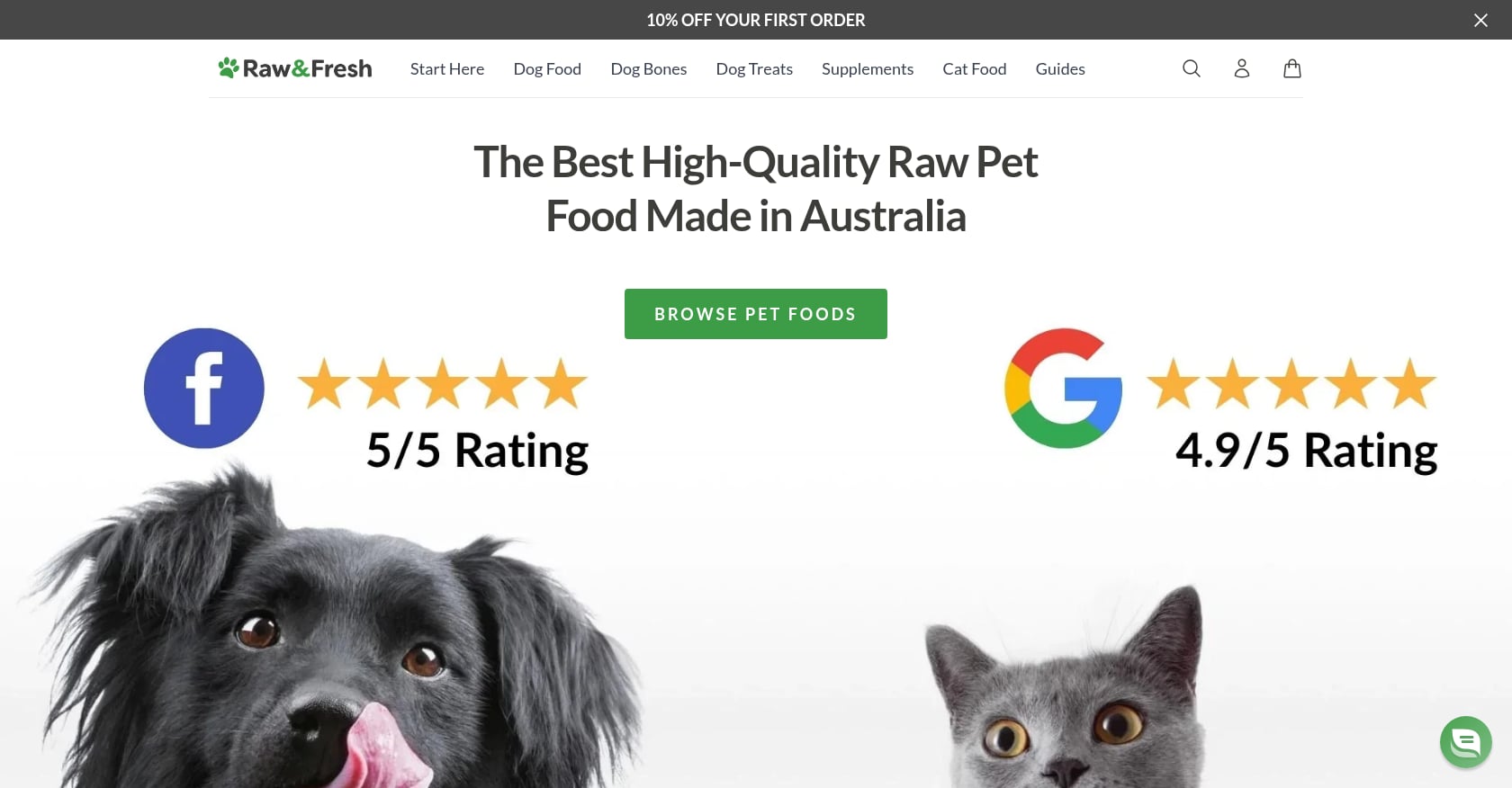
Best for: East coast cat owners who specifically want raw BARF feeding at an accessible price point.
Raw & Fresh delivers raw (not cooked) cat food based on the BARF (Biologically Appropriate Raw Food) philosophy. They deliver fresh rather than frozen, which is unusual in this category. Their coverage spans Sydney, Melbourne, Brisbane, Canberra, and most regional areas in NSW, VIC, QLD, and ACT.
Key features:
- Raw BARF formulation with hormone-free, free-range, human-grade ingredients
- Protein options: chicken, beef, and kangaroo
- Delivered fresh, not frozen
- Wide east coast delivery coverage including regional areas
- Cat products start from $2.40 AUD (Chicken Basics Cat)
- Cat Starter Pack from $17
Pricing: The most affordable fresh entry point on this list. The $17 starter pack is a low-risk way to test raw feeding.
User sentiment: Consistently positive reviews praising timely delivery, pre-portioned convenience, and ingredient quality.
Tradeoffs:
- Raw food carries pathogen risk (salmonella, listeria) that cooked options eliminate. Avoid raw feeding if anyone in your home is immunocompromised, pregnant, elderly, or very young. Read more about whether cats can safely eat raw meat.
- No delivery to Western Australia
- Requires strict handling and hygiene protocols
- Not all recipes may meet AAFCO complete and balanced standards
Who should pick Raw & Fresh: Committed raw feeders on the east coast who understand the handling requirements and want an affordable entry point.
4. ZIWI Peak / Feline Natural

Best for: Cat owners anywhere in Australia who want premium nutrition without needing a freezer or subscription.
These New Zealand-based brands aren’t fresh delivery services. They’re premium air-dried (ZIWI) and freeze-dried (Feline Natural) cat foods available through Pet Circle, specialty pet stores, and online retailers across Australia. They belong on this list because they solve the problem of “fresh cat food delivery near me” when no actual fresh delivery service covers your postcode.
Key features:
- Air-dried or freeze-dried processing preserves more nutrients than traditional kibble
- AAFCO complete and balanced
- Human-grade ingredients
- Long shelf life, no freezer required
- Available nationally through retail channels
- Wide protein variety
Pricing: Premium pricing. Community members on forums note that both ZIWI and Feline Natural have become “sooooo expensive” in recent years. Expect to pay significantly more per day than standard kibble.
Tradeoffs:
- Not fresh or cooked, so you miss the moisture benefits of wet/fresh food
- No subscription delivery model (you buy through retailers)
- High cost per day, especially for multi-cat households
- Self-serve portioning means more guesswork than pre-portioned pouches
Who should pick ZIWI/Feline Natural: Cat owners in areas where no fresh delivery service operates (particularly regional and rural Australia) who want the closest thing to fresh nutrition in a shelf-stable format.
5. Raw Meow
Best for: WA-based cat owners who prefer raw or freeze-dried feeding over gently cooked options.
Raw Meow is a Perth-based company offering freeze-dried raw cat food. For WA cat owners specifically interested in raw feeding, this is the local option. Their freeze-dried format is more convenient than traditional raw because it’s shelf-stable until rehydrated.
Key features:
- Perth-based, locally made
- Freeze-dried raw format
- Available through their website and select WA retailers
Pricing: Varies by product and size. Generally falls in the premium category.
Tradeoffs:
- Raw feeding carries the same pathogen concerns as other raw options
- Requires rehydration before serving
- Less convenient than pre-portioned frozen pouches
- Limited recipe variety compared to larger brands
Who should pick Raw Meow: WA cat owners who are philosophically committed to raw feeding and want a locally made option. If you prefer the safety and convenience of cooked food, Pikko is the WA alternative.
6. Smalls
Best for: US-based cat owners looking for gently cooked fresh cat food delivery. Does not ship to Australia.
Smalls is included here because it dominates US search results and many Australians encounter it while researching. It’s a gently cooked, human-grade cat food subscription that ships within the continental United States only.
Key features:
- 5 recipes: chicken, turkey, pork, fish, and chicken & salmon
- AAFCO compliant
- 100% satisfaction guarantee on first box (full refund if your cat won’t eat it)
- Trial: 28 meals at approximately $1.25 USD per meal
Pricing: Typically $3 to $5 USD per cat per day. Once the trial ends, the fresh food plan costs approximately $1.93 USD per meal ($45 per delivery).
User complaints: Practitioners on review sites report that Smalls is quite expensive for multi-cat households, with monthly costs exceeding $100 USD. One customer reported delayed orders that left them without food for four days. Freezer space is a recurring complaint.
Tradeoffs:
- Does not ship to Australia
- Expensive for multi-cat households
- Delivery reliability issues reported by some subscribers
- Requires significant freezer space
7. KatKin
Best for: UK-based cat owners seeking gently cooked fresh cat food. Does not ship to Australia.
KatKin is a UK-based fresh cat food company founded in 2019, included here for reference since it appears in many global search results.
Key features:
- Gently steam-cooked and frozen, delivered monthly
- 6 recipes: chicken, beef, turkey, lamb, pork, and whitefish
- 100% human-grade meat
- Delivers to England, Wales, and most of mainland Scotland
Pricing: Approximately £1.90 (around $2.40 USD) per day, or £53.20 for 4 weeks.
User sentiment: KatKin holds a 4.9-star average on Trustpilot from nearly 2,000 reviews, which is exceptional.
Tradeoffs:
- Does not ship to Australia
- UK-only delivery
- Pricing may increase based on cat size and appetite
Fresh Cooked vs. Raw vs. Freeze-Dried: Which Format Is Right?
The choice between these three formats comes down to safety, convenience, and cost.
Safety. Gently cooked food (Pikko, CatChi, Smalls, KatKin) eliminates harmful bacteria through cooking while preserving more nutrients than high-heat kibble processing. Raw food (Raw & Fresh, Raw Meow) keeps everything uncooked, which some owners believe is closer to a cat’s natural diet but introduces pathogen risk to the household. Freeze-dried raw (ZIWI, Raw Meow) falls somewhere in between, with the dehydration process reducing but not eliminating all bacterial concerns.
Convenience. Frozen cooked pouches thaw overnight in the fridge and serve directly. Raw fresh food needs careful handling, separate preparation surfaces, and immediate cleanup. Freeze-dried and air-dried products are the simplest, requiring only rehydration or serving straight from the bag.
Cost. Raw tends to be cheapest per day (Raw & Fresh starts from $2.40 per serve). Gently cooked subscriptions sit in the middle. Air-dried premium products like ZIWI can be the most expensive option per calorie.
One practical note that reviewers consistently raise: you don’t have to go all-in. Pet Food Reviews Australia’s expert advises mixing fresh food with another type of cat food (such as kibble) to balance costs. A mixed feeding approach, say fresh food for one meal and quality kibble for the other, captures most of the nutritional benefit at roughly half the cost of going 100% fresh.
For more on this decision, read the full breakdown of fresh vs. raw cat food safety.
How to Switch Your Cat to Fresh Food
Cats are notoriously resistant to dietary change. About 30% of CatChi’s customers report their cats need a gradual transition period, and that figure is fairly standard across the industry.
The gradual approach works best for most cats: mix 25% fresh food with 75% of the current food for the first few days, then shift the ratio over 7 to 10 days. This gives the gut microbiome time to adjust and reduces the chance of digestive upset.
The “cold turkey” approach works for some cats, particularly those who are already enthusiastic about wet food. Offer a small amount of fresh food at normal mealtime. If your cat eats it willingly, you can switch faster.
The critical warning: Never starve a cat into eating new food. Cats that go without food for more than 24 to 48 hours risk developing hepatic lipidosis (fatty liver disease), which can be fatal. If your cat refuses the new food, go back to what they’ll eat and try a slower transition.
For a detailed walkthrough, Pikko publishes a guide on transitioning picky cats to fresh food that covers both approaches with day-by-day instructions.
Practical Tips Most Guides Skip
Freezer space planning. This is the number one practical complaint across all frozen fresh cat food brands. A 14-pouch trial box takes up meaningful freezer real estate. A 28-pouch monthly box takes up more. Before you order, clear a dedicated shelf or drawer. If freezer space is tight, consider a subscription plan with flexible frequency so you can order smaller batches more often.
Dental care alongside soft food. Fresh, gently cooked cat food provides no real dental abrasion. Independent reviewers recommend giving your cat something to chew or gnaw on, like the occasional chicken neck, to maintain healthy teeth and gums. This applies to all soft food diets, not just fresh ones. Talk to your vet about dental chews or professional cleaning schedules.
The “near me” reality check. When you search for fresh cat food delivery near me, understand that “near me” means very different things depending on your location. In Perth, Pikko delivers free. In Sydney and Melbourne, CatChi covers metro areas. In Brisbane and Canberra, Raw & Fresh has you covered. In regional or rural Australia, your best bet is a nationally available shelf-stable premium like ZIWI Peak, or checking whether services deliver to your specific postcode before getting excited.
Ready to Try Fresh Cat Food?
If you’re in Western Australia, start with a Pikko trial box to see how your cat responds to gently cooked, human-grade meals. No lock-in, flexible scheduling, and free delivery.
Frequently Asked Questions
Is fresh cat food worth the extra cost?
For most cats, yes, particularly those with digestive issues, chronic dehydration, or fussy eating habits. The higher moisture content alone can make a meaningful difference for urinary health. That said, you don’t need to feed 100% fresh. Mixing fresh food with quality kibble captures most of the nutritional benefit while keeping costs manageable. For a deeper look, read about whether fresh cat food is worth it.
How much freezer space do I need for fresh cat food delivery?
A 14-pouch trial box from Pikko takes up roughly half a standard freezer shelf. A full 28-pouch monthly box needs a dedicated shelf or drawer. This is a common concern across all frozen cat food brands, with users of Smalls, CatChi, and KatKin all raising freezer logistics as a real consideration. If space is limited, order smaller quantities more frequently.
Can kittens eat fresh cat food?
Yes, provided the food is formulated as AAFCO “all life stages” or specifically for growth. Both Pikko and CatChi meet the AAFCO all life stages standard, meaning their recipes are nutritionally complete for kittens, adults, and seniors. Kittens need more calories per kilogram of body weight, so you’ll feed proportionally more.
What if my cat refuses to eat the fresh food?
This is normal. Many cats, particularly those raised on dry food, are suspicious of new textures and smells. Try the gradual transition method (mixing fresh with current food over 7 to 10 days). Adding a meal topper or warming the food slightly can help. Never withhold food to force a switch, as cats can develop dangerous liver problems within 48 hours without eating. For fussy eaters specifically, there’s a helpful guide on why cats are fussy with food.
How does fresh cat food help with urinary health?
Cats evolved as desert animals and naturally have a low thirst drive. They’re designed to get most of their water from food. Dry kibble contains roughly 10% moisture, while fresh cat food typically contains 65 to 75% moisture. This dramatically increases daily water intake, which supports kidney function and helps prevent urinary crystals and infections. It’s one of the most tangible benefits cat owners notice after switching.
Is raw cat food safe?
Raw cat food is generally safe for healthy adult cats with strong immune systems. The risk is primarily to humans in the household. Salmonella and listeria can contaminate surfaces, bowls, and hands during preparation. If anyone in your home is immunocompromised, pregnant, elderly, or under five years old, gently cooked options are the safer choice.
Do fresh cat food delivery services ship Australia-wide?
Not yet. As of 2026, no single fresh or frozen cat food delivery service covers all of Australia. Pikko delivers free within Western Australia. CatChi covers Sydney, Melbourne, and Newcastle metro. Raw & Fresh reaches most of the east coast including regional areas. For everywhere else, premium shelf-stable products like ZIWI Peak are available through online retailers nationally.
How do I calculate the real daily cost of fresh cat food?
Take the total box price, add shipping (if any), divide by the number of days the box lasts at your cat’s recommended daily intake. That gives you cost per day, which is the only fair way to compare across brands. A $99 box that lasts 8 days costs $12.38 per day. A box that costs less upfront but only lasts 4 days might be more expensive overall. Always factor in your cat’s actual calorie needs based on weight and activity level.