
TL;DR
Sustainable cat food in Australia means better meat sourcing, local ingredients, and smarter packaging, not eliminating meat from your obligate carnivore’s diet. Pikko leads for WA cat owners wanting fresh, Australian-sourced, gently cooked meals with minimal processing. Frontier Pets is the strongest pick for anti-factory-farming advocates nationwide. Budget shoppers can grab Ultimates Indulge at Woolworths. No single brand is perfect on every sustainability measure, so this guide breaks down the real tradeoffs.
Why Sustainable Cat Food in Australia Matters More Than You Think
Fifty-five percent of Australians actively try to buy environmentally friendly products, and that trend holds across every age group. Yet most of us overlook the bowl sitting on the kitchen floor. The global pet food industry emits more greenhouse gases annually than countries like Mozambique and the Philippines. With Australia’s pet food market now worth roughly AU$3.2 billion and growing, the environmental footprint of what we feed our cats is not a rounding error.
Here is the tension that makes sustainable cat food in Australia genuinely complicated: cats are obligate carnivores. They need meat. Unlike dogs, they cannot thrive on plant-based or insect-protein alternatives (more on that below). So sustainability in cat food comes down to how the meat is sourced, where it comes from, and how it’s packaged. Not whether meat is included at all.
This guide compares seven brands available in Australia right now, scored against real sustainability criteria. If you’re also looking for the best cat food overall, we have a broader guide for that. This one focuses specifically on the eco and ethical angle.
Take Pikko’s recipe quiz to find the right fresh meal for your cat.
What Actually Makes Cat Food Sustainable?
Before comparing brands, it helps to know what “sustainable” should mean on a cat food label. Most brands cherry-pick one green credential and call it a day. A genuinely sustainable cat food needs to perform across multiple pillars.
Ingredient sourcing. Free-range, grass-fed, wild-caught, or lower-impact proteins like kangaroo. Local procurement cuts transport emissions significantly.
Processing method. Gentle cooking or freeze-drying preserves nutrients while using less energy than ultra-high-heat extrusion (the process behind most kibble). For a deeper comparison of cooking methods, see this guide on fresh vs raw cat food.
Packaging. Over 95% of pet food bags are considered unrecyclable. Recyclable pouches, compostable materials, and TerraCycle partnerships are the exceptions, not the norm.
Carbon footprint. Renewable energy in production, carbon offsets, and short supply chains all contribute. Wet food and red meat carry a much higher carbon footprint than kibble or poultry-based recipes.
Transparency and traceability. Can you trace where the chicken in your cat’s dinner was raised? Few brands offer paddock-to-plate tracking.
One nuance worth flagging: using organ meats and by-products (the parts humans don’t eat) is actually more sustainable than using only prime cuts. “Human-grade” sounds better from a quality standpoint, and it does mean higher supply chain standards. But from a pure waste-reduction perspective, brands that use offal are making good use of the whole animal. The best sustainable brands find a balance between these values.
At-a-Glance Comparison Table
| Brand | Made In | Format | Key Sustainability Feature | Price Tier | Best For |
|---|---|---|---|---|---|
| Pikko | Australia (WA) | Fresh, frozen | Aussie-sourced, human-grade, gently cooked | Premium | WA cat owners wanting the freshest option |
| Frontier Pets | Australia | Freeze-dried raw | Anti-factory farming; $6M+ to free-range farms | Premium | Eco-warriors who want raw |
| ZIWI Peak | New Zealand | Air-dried / canned | Kaitiakitanga ethos; free-range NZ farming | Ultra-premium | Shelf-stable, no-fuss feeding |
| Feline Natural | New Zealand | Freeze-dried / canned | 100% paddock-to-plate traceability | Ultra-premium | Purists wanting cleanest ingredients |
| Open Farm | Canada | Dry / wet / freeze-dried | TerraCycle recycling; Ocean Wise fish | Premium | Ingredient traceability obsessives |
| Ultimates Indulge | AU / Thailand | Wet pouches | Recyclable pouches; ethical fishing; solar production | Budget-friendly | Supermarket shoppers on a budget |
| Vetalogica | Australia (Sydney) | Dry food | Australian family-owned; local farm partnerships | Mid-premium | Affordable Aussie-made dry food |
The 7 Best Sustainable Cat Food Brands in Australia
1. Pikko
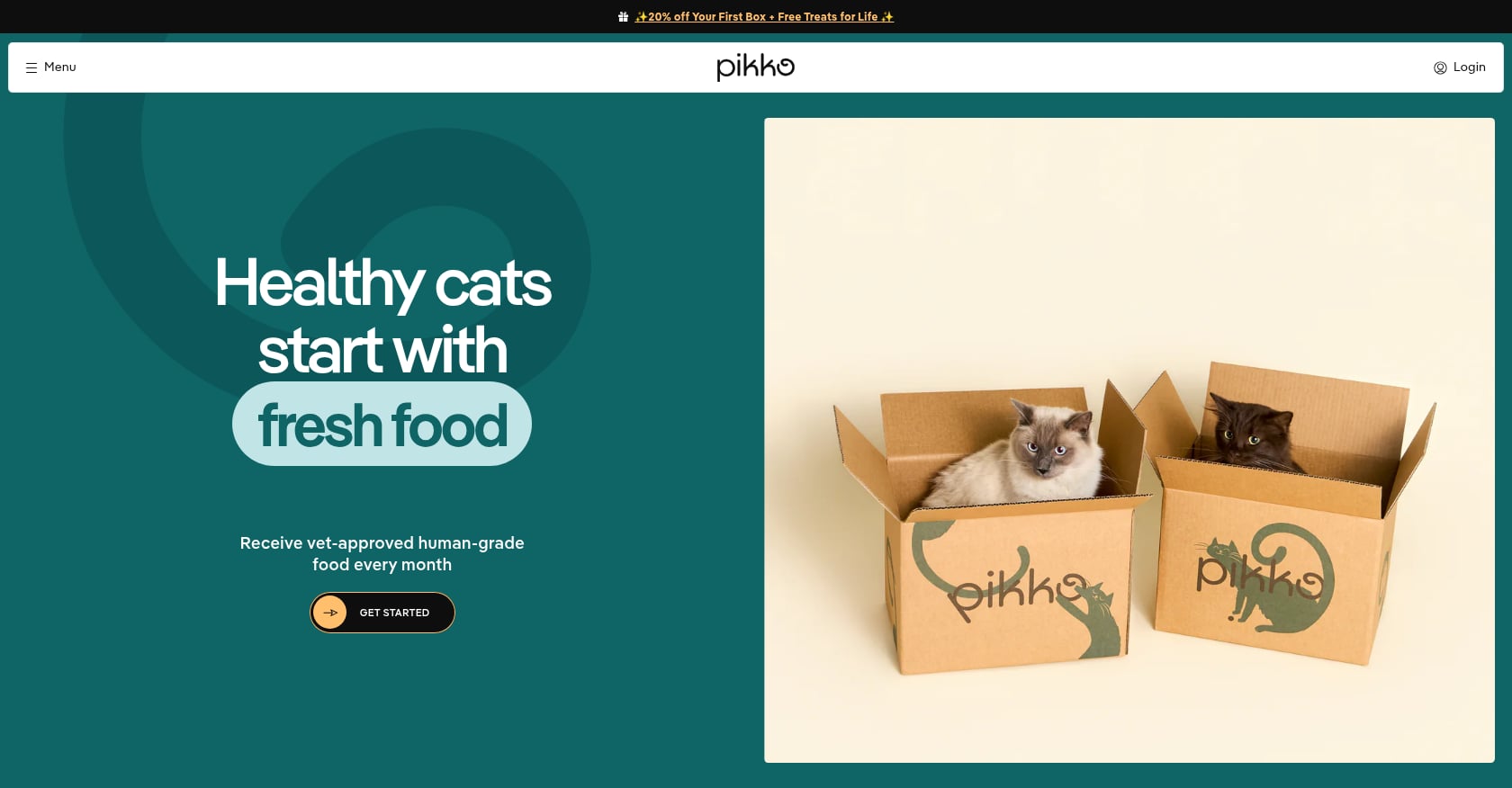
Best for: WA cat owners who want the freshest, most transparent sustainable option with complete nutritional control.
Pikko is a family-owned, WA-based fresh cat food brand delivering gently cooked, human-grade meals made from 100% real meat. All ingredients are Australian-sourced, which keeps the supply chain short and the transport footprint low. Research consistently shows that local sourcing is one of the highest-impact sustainability moves a pet food brand can make. For context, fresh food brand Lyka (dog food) has documented how sourcing 85-95% of ingredients domestically slashes its carbon output.
Key features:
- Four protein recipes: chicken, beef, fish, and pork, all nutritionist-formulated and AAFCO compliant for all life stages
- Gently cooked (not raw), then frozen, preserving nutrients without the pathogen risks of raw feeding
- Daily pouches calibrated at roughly 200 kcal, simplifying portion control for an average adult cat
- No grains, fillers, or preservatives, meaning less industrial processing and fewer additives
- Free delivery across Western Australia in insulated boxes
- Flexible subscription with pause and reschedule options
Sustainability credentials: Australian-sourced ingredients minimize food miles. Gentle cooking uses moderate energy compared to ultra-processed kibble extrusion. The preservative-free approach relies on freezing rather than chemical additives. Human-grade supply chain standards mean greater accountability at every step.
Pricing: Premium tier. Customers start with a discounted trial box of 14 pouches, then move to a 28-pouch subscription.
User sentiment: Pikko holds an “Excellent” aggregate rating on Trustpilot from 41 reviews. Customers frequently mention improved digestion, shinier coats, and picky cats actually finishing meals. Pet Food Reviews AU has praised the ingredient quality and macronutrient profile.
Honest tradeoffs:
- Currently ships within Western Australia only (national expansion is in progress)
- Requires freezer space and thaw planning
- Costs more than supermarket brands
- The fish recipe is a chicken-and-sardine blend, not a single-protein option
Browse all four Pikko recipes to see full ingredient lists and nutrition panels.
2. Frontier Pets
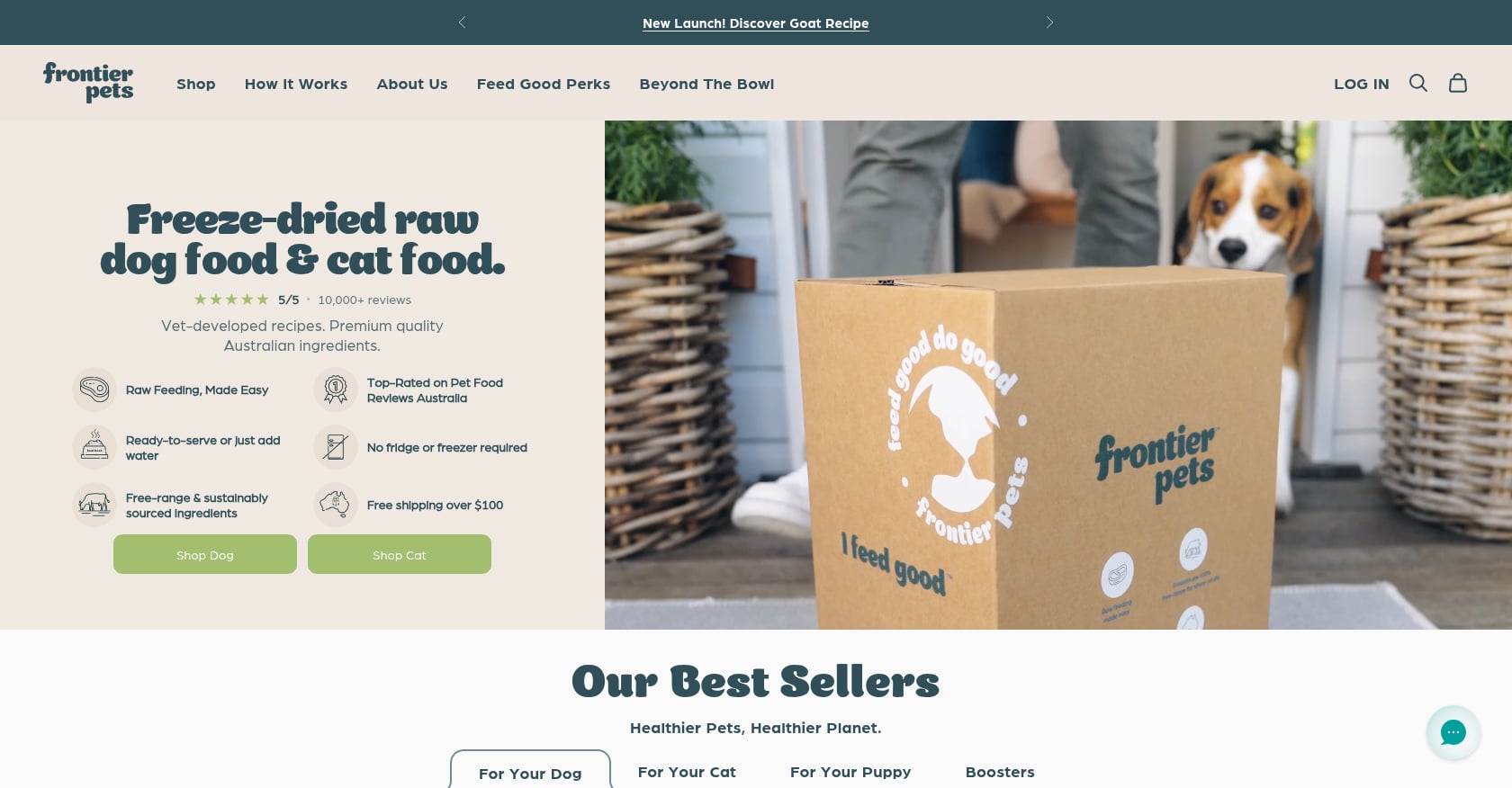
Best for: Eco-conscious owners nationwide who want raw, freeze-dried nutrition with the strongest anti-factory-farming commitment.
Frontier Pets is an Australian brand on a mission to end factory farming. Their cat food is made from 100% whole-of-life free-range protein and certified organic produce, sourced directly from Australian farmers practicing sustainable agriculture. They have contributed over $6 million to sustainably farmed produce through their ingredient purchasing, which gives real financial weight to their claims.
Key features:
- Freeze-dried raw format, AAFCO compliant
- Human-grade ingredients sourced from free-range Australian farms
- Antibiotic and GMO-free
- Naturally higher omega-3 levels due to pasture-raised sourcing
- Ships nationally via direct-to-consumer
Sustainability credentials: The strongest anti-factory-farming stance of any brand on this list. Free-range sourcing, certified organic produce, and direct farmer partnerships. Every purchase directly funds sustainable agriculture.
Pricing: Premium. Subscribe-and-save option with a 10% discount.
User sentiment: An impressive 4.8 out of 5 stars from over 8,800 Australian pet owners. Customer Monica highlighted the “sustainably-sourced, nutritious cat food available, which also has minimal packaging waste.” Another customer reported dramatic improvements in their cat’s chronic skin conditions after switching.
Honest tradeoffs:
- Raw format requires rehydration with water before serving
- Some cats (and owners) prefer cooked food over raw
- Higher price point than most alternatives
- If you’re cautious about raw feeding, it’s worth reading up on how fresh cooked and raw compare
3. ZIWI Peak
Best for: Owners who value ethical NZ provenance, shelf stability, and no-fuss feeding without refrigeration.
ZIWI Peak sources most ingredients from sustainable New Zealand farms, ranches, and waters. Their approach is built around kaitiakitanga, a Māori concept of guardianship of the land and sea. New Zealand’s temperate climate allows year-round access to free-range, grass-fed cattle, sheep, and deer, and all fish comes from sustainably managed fisheries.
Key features:
- Air-dried and canned formats
- Up to 98% meat, organs, and bones
- Free-range, grass-fed NZ proteins
- Zero product recalls in brand history
- No refrigeration needed for air-dried range
Sustainability credentials: Ethical free-range farming rooted in kaitiakitanga principles. Sustainable fishery partnerships. New Zealand’s relatively low-intensity farming model means lower chemical inputs than many conventional systems.
Pricing: Ultra-premium. Wet food runs approximately $5 per 185g can, and air-dried food costs roughly $3 per day for a 4.5kg cat.
User sentiment: Well-regarded among premium cat food buyers. Some forum users note the cost becomes a real barrier for multi-cat households.
Honest tradeoffs:
- Not Australian-made (imported from NZ, adding transport emissions)
- One of the most expensive options on the market
- No specific recyclable packaging program mentioned
- Limited to NZ-sourced proteins
4. Feline Natural
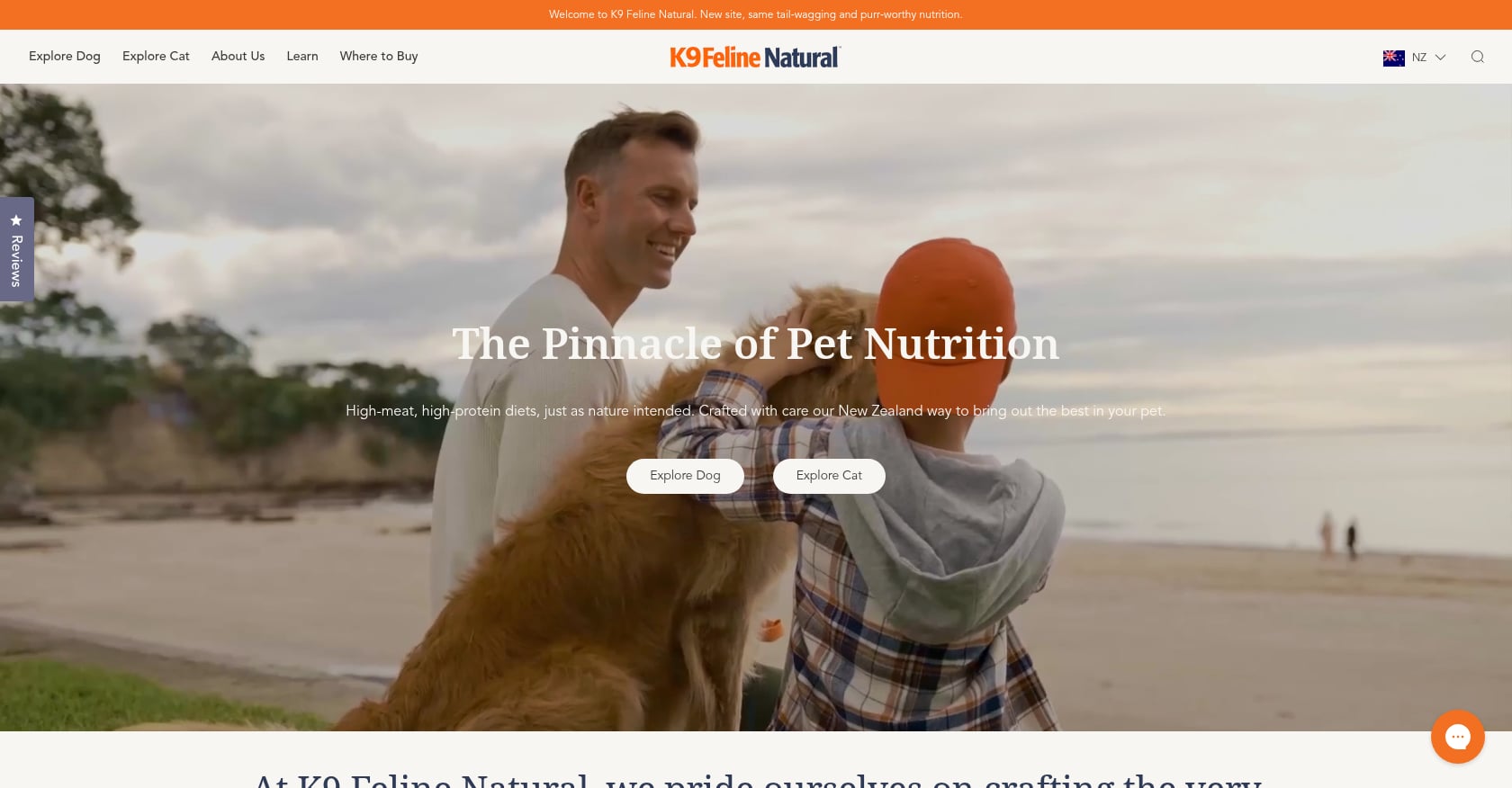
Best for: Purists who want the cleanest, simplest ingredient lists with full paddock-to-plate traceability.
Feline Natural (often called “K9 Natural” for the cat range) offers 100% traceable ingredients, all ethically and sustainably sourced from New Zealand. Like ZIWI Peak, they benefit from NZ’s farming standards, but Feline Natural puts particular emphasis on whole-food recipes with minimal processing and no gelling agents or fillers.
Key features:
- 98% high-protein freeze-dried and canned recipes
- Complete ingredient traceability from paddock to plate
- No gelling agents, fillers, or artificial additives
- Zero recalls in brand history
- Manufactured in New Zealand under strict food safety standards
Sustainability credentials: Full traceability is rare in pet food. Knowing exactly where every ingredient originates allows consumers to verify ethical sourcing claims rather than taking them on faith.
Pricing: Ultra-premium. Freeze-dried packs at Pet Circle run approximately $47.99 for 320g.
User sentiment: One reviewer put it bluntly: “I feed nothing but Feline Naturals to my kitties. I personally feel it’s the healthiest one not only in Australia, but the world.”
Honest tradeoffs:
- NZ-sourced, not Australian (transport footprint applies)
- Among the most expensive cat foods available
- Limited flavour range compared to broader brands
- Freeze-dried format requires rehydration
5. Open Farm
Best for: Owners who want maximum ingredient traceability and the most developed recycling program available in Australia.
Open Farm was founded in 2014 by Jacqueline Prehogan and Isaac Langleben, inspired by their rescue pugs, with a mission to build a pet food company that prioritized transparency, sustainability, and ethical sourcing. They offer something genuinely unique: lot-level ingredient traceability. You can go to their website, type in the bag number, and see exactly where every ingredient came from.
Key features:
- Dry, wet, and freeze-dried formats
- Lot-level ingredient traceability via bag number
- First pet food brand to partner with TerraCycle Australia for nationwide packaging recycling
- Ocean Wise certified sustainable fish
- Recyclable packaging and carbon-neutral shipping options
- Support for regenerative farming practices
Sustainability credentials: The most comprehensive sustainability program of any brand on this list. TerraCycle partnership tackles the packaging problem head-on. Ocean Wise certification ensures responsible seafood sourcing. Regenerative farming support goes beyond “sustainable” to actively restoring soil health.
Pricing: Premium. Available from approximately AU$29.99 at their Australian online store. Expect to pay 2-3x more than national supermarket brands.
User sentiment: Cats.com gives Open Farm an A-minus grade (49 out of 60). Some users have flagged that certain recipes contain high levels of plant-based proteins like lentils and chickpeas, pushing carbohydrate content above what strict carnivore-diet advocates prefer. If you care about avoiding fillers, check the ingredient panels on specific recipes.
Honest tradeoffs:
- Made in Canada, meaning long-haul transport to Australia undermines some environmental gains
- Several formulas lean heavily on plant-based proteins
- Carbohydrate content in dry and some wet recipes is fairly high for cats
- Premium pricing without the “local” advantage
6. Ultimates Indulge (Planet Friendly Range)
Best for: Budget-conscious cat owners who want an accessible sustainable option from the supermarket shelf.
Ultimates Indulge is the most practical entry point for Australians who want to make a more sustainable choice without overhauling their shopping routine. Their Planet Friendly range features recyclable pouches (used to build roads and concrete footpaths after recycling), ethically sourced tuna and salmon, and solar-powered daytime production at their Adelaide facility. They are also a signatory to the Australian Packaging Covenant.
Key features:
- Available at Woolworths, the most accessible option on this list
- Recyclable pouches through the Australian Packaging Covenant
- Ethically sourced fish (tuna and salmon)
- Reduces agricultural waste by using organ meats not consumed by humans
- Solar-powered production during daytime hours
Sustainability credentials: The organ-meat approach is genuinely sustainable, making full use of the animal rather than discarding nutritious parts. Recyclable packaging and solar production put them ahead of most supermarket competitors.
Pricing: Budget-friendly. Available in 85g pouches at standard supermarket pricing.
Honest tradeoffs:
- The Planet Friendly line is fish-only (no poultry or red meat options)
- Pouch range is manufactured in Thailand, adding transport emissions
- Less ingredient transparency than premium brands
- Not a complete sustainability story, but a meaningful step for mainstream buyers
7. Vetalogica
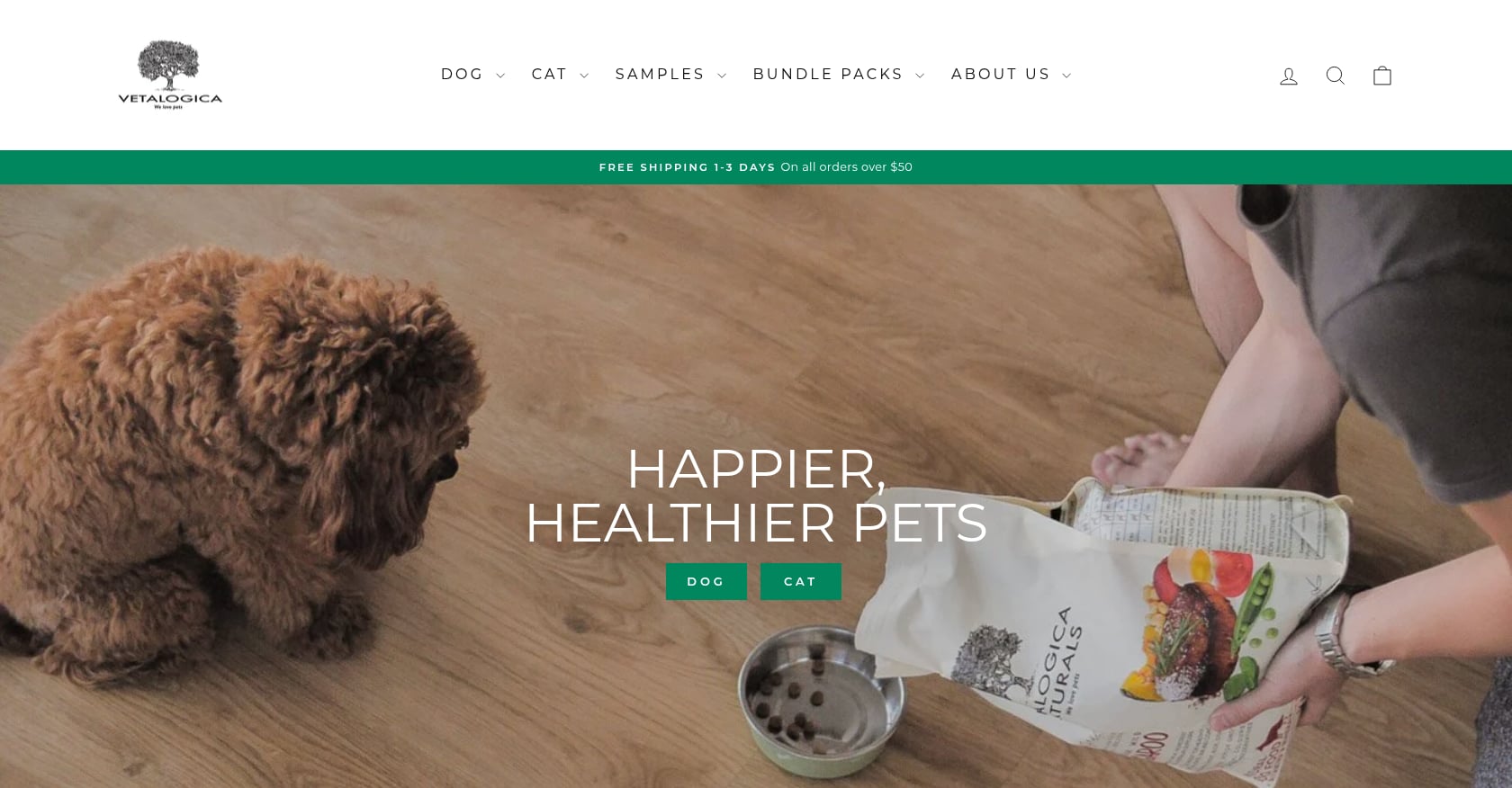
Best for: Owners wanting Australian-made dry cat food that supports local farms without ultra-premium pricing.
Vetalogica is a family-owned Australian business based in Sydney. They source ingredients from local farms, working exclusively with farmers who share their standards for animal health and wellbeing. Their dry cat foods are cooked and crafted locally in small batches.
Key features:
- Made in Sydney from Australian-sourced ingredients
- Grain-free with no artificial colours or flavours
- Small-batch production for freshness
- Sample packs available for cautious buyers
- Supports local farming communities
Sustainability credentials: The “buy local” argument is strong here. According to Roy Morgan, 73% of Australians would pay more for locally made goods. Vetalogica delivers on that preference with genuine Australian manufacturing and local farm partnerships.
Pricing: Mid-premium. More affordable than freeze-dried or fresh options, with sample packs lowering the trial commitment.
Honest tradeoffs:
- Primarily dry food, which means lower moisture content (a concern for cats prone to urinary issues)
- Sustainability claims centre on local sourcing rather than formal environmental programs
- No specific recyclable packaging initiatives mentioned
- Limited format range compared to brands offering wet, raw, and freeze-dried options
Honourable Mentions
Meals for Mutts/Cats (MfM) deserves a shout for its kangaroo-based cat food recipes. Kangaroo is one of the most sustainable proteins available in Australia. On average, 244 grams of kangaroo meat can be produced per kilogram of greenhouse gas emissions, compared to only 44 grams of beef. MfM’s Cat Kangaroo & Turkey and Cat Mackerel & Salmon recipes are Australian-made and grain-free. If carbon footprint is your primary concern, kangaroo protein is hard to beat.
Insect protein is an emerging space worth watching. Grubbo, Australia’s first insect-protein pet food brand, currently makes dog food only. When asked about cat food, they responded candidly: “Cats are a bit harder to please! But watch this space.” Producing 100g of pea protein generates 0.4 kg of CO2 equivalent, while the same amount from beef produces 35 kg, nearly 90 times more. Insect protein falls somewhere in between, and once formulations meet feline nutritional requirements, this could reshape the sustainable cat food market.
How to Choose: A Quick Decision Guide
Your priorities should drive the pick.
Tightest budget? Ultimates Indulge at Woolworths. It’s not perfect, but it’s a genuine step forward from conventional supermarket cat food.
Freshest and most local? Pikko, if you’re in Western Australia. Australian-sourced ingredients, gently cooked, no preservatives, delivered to your door. If you’re considering a cat food subscription, Pikko’s flexible model lets you pause or reschedule as needed.
Strongest environmental mission? Frontier Pets, with its direct investment in free-range farming and anti-factory-farming stance.
Shelf-stable premium? ZIWI Peak or Feline Natural, both from New Zealand, both zero-recall, both incredibly high meat content.
Maximum traceability and recycling? Open Farm, with lot-level tracking and TerraCycle. Just factor in the Canada-to-Australia shipping reality.
Australian-made dry food? Vetalogica, supporting Sydney-area farms at a mid-premium price point.
Try Pikko’s trial box to see how your cat responds to fresh, sustainably sourced meals.
Frequently Asked Questions
Is sustainable cat food actually better for my cat?
Often, yes. Sustainable brands tend to use higher-quality ingredients, fewer artificial additives, and more transparent supply chains. These qualities overlap heavily with what makes cat food nutritionally superior. That said, “sustainable” alone doesn’t guarantee complete nutrition. Always check that any cat food meets AAFCO standards for complete and balanced feeding. Pet Circle’s vet team has emphasized that eco values should never come at the cost of nutritional adequacy.
Can cats eat insect protein or plant-based food?
Cats are obligate carnivores, meaning they require nutrients (like taurine, arachidonic acid, and preformed vitamin A) found naturally in animal tissue. Plant-based and insect-based diets for cats are still in early stages and not widely endorsed by veterinary nutritionists. Grubbo, Australia’s own insect-protein brand, has acknowledged that formulating for cats is harder than for dogs. For now, the most responsible path to sustainable cat food in Australia is better meat sourcing, not meat elimination.
How do I reduce my cat’s carbon pawprint?
Three practical moves make the biggest difference. First, choose locally sourced cat food to cut transport emissions. Second, favour poultry or fish over beef and lamb, since red meat carries a dramatically higher carbon footprint. Third, look for brands with recyclable packaging or TerraCycle partnerships, since standard pet food bags are almost universally unrecyclable. If you want to go further, kangaroo-based recipes offer one of the lowest carbon proteins available.
Is Australian-made cat food more sustainable than imported options?
Generally, yes. Shorter supply chains mean fewer transport emissions. Australia’s farming regulations also tend to be stricter than many exporting countries. Brands like Pikko, Frontier Pets, and Vetalogica source and manufacture domestically, keeping food miles low. New Zealand brands like ZIWI Peak and Feline Natural are a close second given the relatively short shipping distance, but Canadian-made brands like Open Farm carry a larger transport footprint to reach Australian shelves.
Is it worth paying more for sustainable cat food?
The organic and natural pet food market in Australia is projected to grow from US$672 million to US$1.2 billion by 2034, which suggests plenty of Australian pet owners think so. The premium typically reflects higher-quality ingredients, better farming practices, and more accountable supply chains. Many owners report improvements in their cat’s coat, digestion, and energy after switching, which can reduce vet bills over time. If you’re weighing the cost, this guide on whether fresh cat food is worth it breaks down the numbers.
What certifications should I look for on sustainable cat food?
Look for AAFCO compliance (nutritional completeness), Ocean Wise (sustainable seafood), Certified Organic, and membership in the Australian Packaging Covenant. Lot-level traceability (like Open Farm offers) is another strong signal. Be cautious of vague terms like “natural” or “eco-friendly” without supporting detail, as these are not regulated claims in Australia’s pet food industry.
How do I transition my cat to a new sustainable food?
Most vets recommend a gradual transition over 7 to 10 days, slowly increasing the proportion of new food while decreasing the old. Some cats handle a faster switch, but if your cat has a sensitive stomach or is a particularly fussy eater, patience pays off. Pikko provides transition guidance covering both gradual and direct-switch approaches.